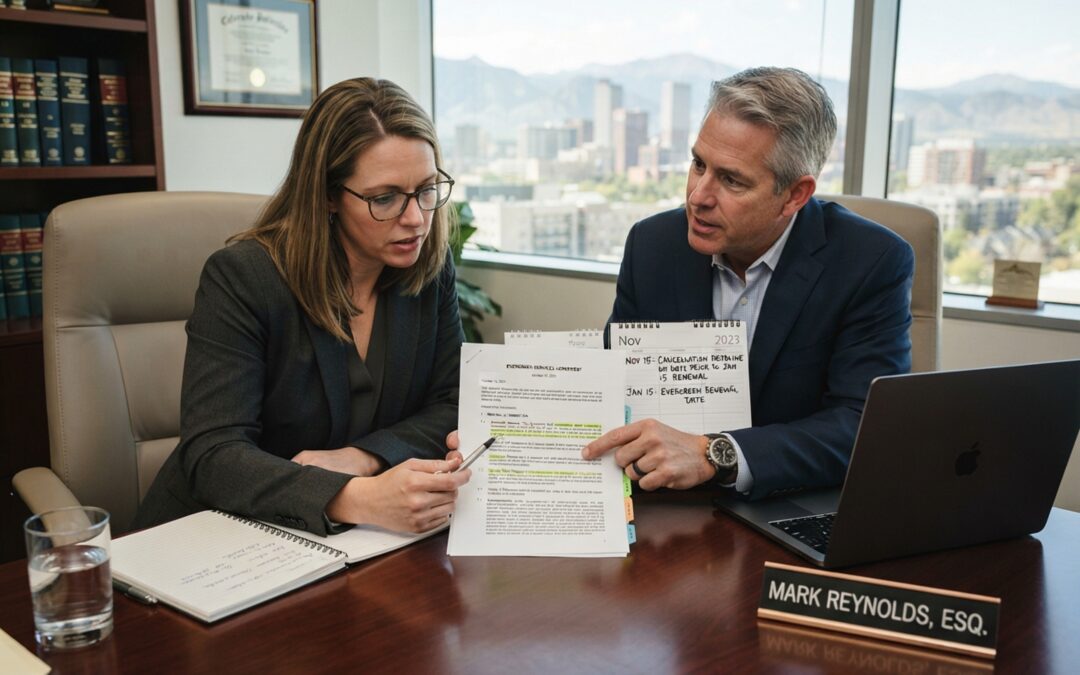
Colorado Overtime Laws: What Employers Need to Know in 2026
2026 Colorado Overtime Rules for Business Owners
An employee works 11 hours on Monday, 13 hours on Tuesday, and finishes the week with fewer than 40 total hours. Does your business owe overtime? In Colorado, the answer may be yes. That is where employers can run into trouble. Colorado overtime laws are not based only on the familiar 40-hour workweek. Daily hours, consecutive hours, employee classification, salary levels, bonuses, commissions, and the way working time is recorded can all affect what an employee is owed.
The safest approach is not to assume your payroll system is handling everything correctly. Review the actual job duties, hours worked, compensation structure, and applicable exemptions first. The Law Office of E.C. Lewis, P.C. helps Denver and Colorado businesses understand employment requirements before a payroll question develops into a wage claim or larger compliance problem.
When Does Colorado Overtime Begin?
For most non-exempt employees covered by Colorado overtime laws, overtime is generally paid at one and one-half times the employee’s regular rate of pay. Colorado overtime may apply when an employee works more than 40 hours during a workweek, more than 12 hours during a workday, or more than 12 consecutive hours, regardless of when the workday begins and ends.
Employers must apply the rule that results in the greater amount of overtime compensation rather than paying the same hours twice. This is an important difference between Colorado and the basic federal overtime rule. An employee does not necessarily need to reach 40 hours during the week before overtime obligations begin. A long workday can create overtime on its own.
Do Not Rely on the 40-Hour Rule Alone
One common payroll mistake is looking only at weekly totals. Suppose an employee works 13 hours one day and shorter shifts for the remainder of the week. The employee may finish the week below 40 hours, but the extended workday can still trigger overtime under Colorado rules.
Businesses with irregular schedules should pay particular attention to this requirement. Restaurants, retailers, professional service firms, medical practices, seasonal businesses, and companies with employees working longer project days can all encounter daily overtime issues. When reviewing Colorado employment laws, employers should make sure managers and payroll staff understand both daily and weekly requirements.
Salary Does Not Automatically Mean Exempt
Another frequent misunderstanding is that salaried employees do not receive overtime. Being paid a salary alone does not create an overtime exemption. For many executive, administrative, and professional exemptions under Colorado law, the employee must satisfy both compensation requirements and specific job-duty requirements.
In 2026, the Colorado salary threshold for these executive, administrative, and professional exemptions is $57,784 annually. Meeting that threshold is only part of the analysis. An employee’s title does not control the result either. Calling someone a manager, administrator, director, or supervisor does not make the employee exempt if the person’s actual responsibilities do not satisfy the applicable duties test. Employers should examine what employees actually do rather than relying on their job descriptions or payroll classifications. The Law Office of E.C. Lewis, P.C. assists businesses with these questions through our employment law services.
Actual Job Duties Matter
Classification problems often begin when a job changes but the payroll classification does not. A small business may promote an employee to a salaried position and give the person a management title. Over time, however, that employee may spend most of the workday performing the same routine tasks as non-exempt employees.
Another worker may have substantial independence and decision-making authority that better fits an exemption. These situations require a factual review. Employers should consider the employee’s real responsibilities, level of authority, independence, management duties, and other requirements associated with the specific exemption being considered. Do not assume that a salary increase alone solves the issue.
Calculate the Regular Rate Carefully
Overtime is generally based on an employee’s regular rate of pay, but that rate is not always the same as the person’s basic hourly wage. Certain forms of compensation may need to be included when determining the regular rate. Depending on the circumstances, this can include nondiscretionary bonuses, commissions, shift differentials, production incentives, and other compensation related to the employee’s work.
That can make overtime calculations more complicated for employees whose compensation changes from week to week. For example, simply multiplying the base hourly rate by 1.5 may not produce the correct overtime amount when additional compensation must be included in the regular rate. Employers using commissions, incentive programs, or performance bonuses should review how those payments interact with overtime calculations.
Make Sure All Working Time Is Recorded
Overtime problems are not always caused by the overtime rate itself. Sometimes the issue is missing time. Colorado requires employers to account for compensable working time. That can include work performed before or after a scheduled shift, certain setup or cleanup activities, required work communications, time employees are required to remain on duty, and some work-related travel.
Remote work can make this issue even easier to overlook. An employee may answer work emails at night, finish a task after logging out, respond to customer messages from home, or begin working before the official start of the day. If the employer knows or permits the work to occur, simply having a policy against unauthorized overtime may not eliminate the wage obligation. Managers should be trained to recognize off-the-clock work and employees should have a reliable way to report all time worked.
Watch for Common Overtime Warning Signs
A Colorado employer does not need to wait for a formal wage complaint before reviewing its practices. Repeated payroll adjustments can be a warning sign. So can employees regularly working through scheduled times, managers telling staff not to record extra hours, salaried employees performing primarily non-managerial work, or workers responding to messages outside their recorded shifts.
Another concern arises when a business has used the same employee classifications for years without reviewing whether duties or wage requirements have changed. Colorado wage and hour laws evolve. Compensation thresholds can change, and businesses themselves change as employees take on different responsibilities. Periodic review is therefore part of good employment-law management.
Why Overtime Mistakes Matter
An overtime error affecting one employee for one pay period may be relatively straightforward to correct. A repeated practice affecting several employees over months or years can be much more complicated. Depending on the circumstances, unpaid wage disputes may involve back wages, penalties, interest, legal costs, or other consequences. Problems can become more serious when the employer lacks accurate records showing hours worked and compensation paid.
Employee concerns can also expand beyond overtime. A review may uncover issues involving minimum wage, breaks, employee classification, payroll records, or other employment requirements. Addressing a questionable practice early gives a business more opportunity to correct it before the exposure grows.
Review Your Payroll Practices in 2026
Employers should periodically examine their wage and hour practices instead of assuming that a payroll provider or software platform handles every legal determination. Payroll software calculates information based on the rules and classifications entered into the system. It does not necessarily determine whether an employee legally qualifies for an exemption or whether managers are allowing unrecorded work. Start by reviewing who is classified as exempt and why. Compare written job descriptions with actual responsibilities. Look at timekeeping procedures, bonuses, commissions, remote work practices, scheduling, and overtime calculations. If something does not match, investigate before making assumptions.
The Law Office of E.C. Lewis, P.C. provides legal solutions for businesses in Denver and throughout Colorado. Established January 1, 2010 by Denver business lawyer Elizabeth Lewis, our goal is to provide startups and established businesses with individualized legal support based on how their companies actually operate. We work with businesses ranging from sole entrepreneurs to companies with more than 100 employees. That experience allows us to look beyond a generic compliance checklist and understand the practical employment issues facing each business.
Frequently Asked Questions
When Is Overtime Required in Colorado?
For most covered non-exempt employees, Colorado overtime can apply after more than 40 hours in a workweek, more than 12 hours in a workday, or more than 12 consecutive hours. Employers generally must apply the calculation that produces the greater overtime payment.
What Is the Colorado Overtime Salary Threshold for 2026?
The 2026 Colorado salary threshold for many executive, administrative, and professional exemptions is $57,784 per year. Salary alone is not enough. The employee must also satisfy the duties and other requirements of the applicable exemption.
Do Salaried Employees Get Overtime in Colorado?
Some do. A salaried employee may still be non-exempt and entitled to overtime. Employers should review both the employee’s compensation structure and actual job duties before treating the employee as exempt.
Can an Employer Give Comp Time Instead of Overtime in Colorado?
Private employers generally cannot avoid required overtime by simply giving an employee time off later instead of paying the overtime premium required by Colorado wage rules.
Do Bonuses Affect Colorado Overtime Pay?
Certain nondiscretionary bonuses, commissions, shift differentials, and other forms of compensation may need to be included when determining an employee’s regular rate for overtime purposes. The correct calculation depends on the type of compensation involved.
How Often Should Employers Review Overtime Classifications?
Employers should review classifications when job duties or compensation change and periodically as wage laws and salary thresholds are updated. A review is particularly important when an employee’s actual responsibilities no longer match the original job description.
Review Your Overtime Practices Before a Payroll Issue Grows
Colorado overtime compliance depends on more than counting hours at the end of the week. Employee duties, daily schedules, compensation, timekeeping practices, and exemption requirements should all be reviewed together.
We understand how Colorado wage and hour requirements apply to your business. Contact our office to discuss your employment-law questions.
Independent Contractor vs Employee in Colorado: What the Law Says
Colorado Worker Classification: Employee or Contractor?
Hiring someone as an independent contractor can seem straightforward. You agree on the work, pay an invoice, issue a 1099 when required, and avoid many of the administrative responsibilities that come with hiring an employee. But the label alone does not decide the worker’s legal status.
When determining whether someone is an independent contractor vs employee in Colorado, the actual working relationship matters. How much control does the business exercise? Does the worker operate an independent business? How is the work performed? What does the relationship look like in practice? For Colorado business owners, the safest approach is to evaluate the relationship before choosing a classification. The Law Office of E.C. Lewis, P.C. helps businesses understand these distinctions and structure working relationships more carefully before a classification problem develops.
The Contract Does Not Decide Everything
One of the most common mistakes businesses make is assuming that an independent contractor agreement automatically makes someone an independent contractor. It does not. A written agreement is important because it documents the relationship and each party’s responsibilities. However, Colorado regulators may look beyond the title of the agreement and consider what actually happens while the person is working.
The same is true of tax paperwork. Paying someone using a 1099 rather than a W-2 does not automatically establish independent contractor status. The Law Office of E.C. Lewis, P.C. addresses these issues as part of our employment law services for Colorado businesses. The goal is to look at the entire relationship rather than relying on one document or label.
Colorado Looks at the Real Working Relationship
Colorado worker classification rules can vary depending on which law is being applied. For unemployment insurance purposes, Colorado law generally focuses on whether the worker is free from control and direction in performing the service and whether that person is customarily engaged in an independent trade, occupation, profession, or business related to the work being performed.
Colorado wage laws may involve a broader review of the actual circumstances surrounding the relationship. That is why there is no single question that determines the result in every situation. Businesses need to understand what the worker actually does, how independently the person operates, and how closely the relationship resembles traditional employment.
Control Is an Important Factor
Control is one of the first areas to examine when considering an independent contractor vs employee in Colorado. An employee typically works under greater direction from the business. The employer may decide when the person works, how the work is performed, where the work takes place, and what procedures must be followed.
An independent contractor generally has more control over how the contracted result is accomplished. That does not mean a business can never provide deadlines, specifications, or quality requirements to a contractor. Businesses obviously need to explain what they are paying for. The question is how much control the company exercises over the manner in which the person performs the work. The more the relationship functions like supervision of an employee, the more carefully the classification should be reviewed.
Independent Business Activity Matters
Another important question is whether the worker genuinely operates an independent business. A contractor may provide similar services to multiple customers, market those services independently, maintain separate business operations, negotiate project terms, or otherwise operate as a business separate from the company purchasing the services.
Someone who functions almost entirely as part of one company’s regular operations may present a different classification question. This does not mean any single fact automatically determines whether the worker is an employee. Instead, the circumstances should be considered together. Our detailed discussion of independent contractors and employees explains why Colorado businesses should evaluate classification carefully rather than assuming contractor status is the easier option.
Warning Signs Worth Reviewing
Classification concerns often appear gradually. A business may initially hire someone for a limited project. Over time, that individual starts working regular hours, attends staff meetings, receives day-to-day instructions from a manager, performs ongoing work central to the company, and begins functioning much like other employees. The original paperwork may still describe the person as an independent contractor, but the actual relationship may have changed.
Another warning sign occurs when a business decides that a worker should be a contractor primarily because hiring an employee would involve payroll taxes, unemployment insurance, workers’ compensation, wage requirements, or additional administrative work. Cost may influence a hiring decision, but it does not determine legal classification. The better question is whether the working arrangement genuinely fits the applicable requirements.
Why Proper Classification Matters
Misclassification can create significantly more work than correctly addressing the issue at the beginning. Depending on the law involved and the circumstances, a business that misclassifies an employee may face claims or obligations involving unpaid wages, overtime, taxes, unemployment insurance, workers’ compensation, paid leave, penalties, or other employment-related responsibilities.
Colorado law also allows penalties in certain cases involving willful worker misclassification. The consequences can become more serious when the same classification practice affects multiple workers over an extended period. This is why businesses should not wait for a government inquiry, wage complaint, termination dispute, or tax issue before reviewing how workers are classified.
A Written Agreement Still Matters
Although an agreement cannot override the actual facts, a properly drafted independent contractor agreement remains important. The agreement can describe the services being provided, compensation, project deadlines, ownership of work, confidentiality obligations, termination rights, insurance responsibilities, and the independent nature of the relationship.
Colorado law also provides circumstances in which a properly structured written agreement can create a rebuttable presumption of an independent contractor relationship for certain purposes. Specific requirements apply, so simply adding the words “independent contractor” to a standard contract is not enough. Businesses should therefore treat the agreement as part of the classification analysis, not as a substitute for it.
Federal Rules May Apply Too
Colorado businesses also need to remember that worker classification is not exclusively a state-law issue. Federal wage law and federal tax rules may use their own standards when determining whether someone should be treated as an employee or independent contractor.
A worker’s classification can therefore require more than one legal analysis depending on the issue involved. This is one reason The Law Office of E.C. Lewis, P.C. recommends evaluating the actual arrangement rather than relying on general assumptions about what makes someone a contractor.
Review the Relationship Before Hiring
The best time to address worker classification is before the person starts working. Consider what the person will actually do. Determine who will control the work, whether the relationship is project-based or ongoing, how integrated the worker will be into daily operations, and whether the person genuinely operates an independent business. Then make sure the written agreement reflects the arrangement you actually intend to create. Businesses should also revisit existing relationships periodically. A legitimate contractor arrangement at the beginning of a project can evolve as responsibilities and working practices change.
The Law Office of E.C. Lewis, P.C. provides legal solutions for businesses in Denver and throughout Colorado. Established January 1, 2010 by Denver business lawyer Elizabeth Lewis, we work with businesses ranging from sole entrepreneurs to established companies with more than 100 employees. Our approach is individualized because worker classification depends heavily on the facts. We take the time to understand how your business operates before helping you evaluate whether a working relationship is structured appropriately.
Do Not Wait for a Classification Dispute
If you are uncertain whether someone should be classified as an employee or independent contractor, it is usually easier to address that uncertainty before a dispute occurs. A worker may raise the issue after termination. It may surface during an unemployment claim, wage complaint, workers’ compensation matter, tax review, or government investigation.
At that point, the business may be defending decisions that were made months or years earlier. Reviewing the classification and agreement beforehand gives the business an opportunity to identify concerns, correct inconsistencies, and create documentation that better reflects the intended relationship.
Frequently Asked Questions
Does a 1099 Make Someone an Independent Contractor in Colorado?
No. Tax paperwork alone does not determine worker classification. Colorado agencies can examine the actual relationship between the worker and the business, including factors such as control and whether the worker operates an independent business.
Can an Independent Contractor Work for Only One Company?
Working for one company does not necessarily answer the classification question by itself. The entire relationship must be considered. However, exclusivity and the worker’s ability to operate an independent trade or business can be relevant depending on the legal test being applied.
Does an Independent Contractor Agreement Protect My Business?
A properly drafted agreement is important and may help document the intended relationship, but the business must also operate consistently with that agreement. Calling someone an independent contractor on paper will not necessarily control if the actual facts indicate an employment relationship.
What Happens if an Employee Is Misclassified as a Contractor?
Depending on the circumstances, misclassification may result in liability involving wages, overtime, taxes, unemployment insurance, workers’ compensation, paid leave, penalties, or other obligations. The specific consequences depend on the laws involved and the facts of the relationship.
Can a Contractor Become an Employee Over Time?
The nature of a working relationship can change. A person hired for a limited independent project may gradually take on regular duties, increased supervision, fixed working expectations, or responsibilities that resemble employment. Existing contractor relationships should therefore be reviewed periodically.
When Should a Colorado Business Talk to an Employment Lawyer?
Consider getting legal guidance before hiring contractors, when changing an existing worker’s classification, when updating independent contractor agreements, or whenever the actual working arrangement no longer seems consistent with the original agreement.
Get the Classification Right Before Problems Begin
Choosing between an employee and an independent contractor should be based on how the relationship actually works, not simply which option appears easier or less expensive. The Law Office of E.C. Lewis, P.C. can review your working arrangement, agreements, and business practices to help you understand the classification issues that may apply.
If you are hiring a worker or have questions about an existing contractor relationship, contact The Law Office of E.C. Lewis, P.C. to discuss your situation and the steps you can take to reduce unnecessary employment-law risk.
A disagreement over a contract can put a business owner in a difficult position. Maybe a client has stopped paying, a vendor failed to deliver what was promised, a contractor believes the agreement says something different, or another party is threatening legal action. The first response should not automatically be a lawsuit.
Colorado contract disputes can often be addressed through negotiation, mediation, arbitration, or litigation. Which option makes sense depends on the contract itself, what happened, the amount at stake, the relationship between the parties, and the dispute resolution terms already included in the agreement. At The Law Office of E.C. Lewis, P.C., we start by understanding the contract and the facts behind the disagreement. That allows us to identify the real issue before determining how the business should respond.
Start With the Contract
Before deciding how to resolve a business contract dispute, start with the document itself. A contract may already explain what happens when one party fails to perform. It may require written notice, give the other party time to correct a breach, require mediation before a lawsuit, or specify that disputes must go through arbitration.
Other provisions can be just as important. Payment terms, termination rights, warranties, limitation of liability clauses, indemnification provisions, governing law, and venue requirements can all affect what happens next. This is why careful contract review and interpretation matters. The question is not simply whether one side is unhappy. The first question is what each party actually agreed to do.
Identify the Actual Dispute
Not every contract disagreement is the same. One party may believe there has been a breach because payment was late. Another dispute may involve missed deadlines, incomplete services, defective work, unauthorized use of intellectual property, confidentiality concerns, or disagreement over the scope of the project.
Sometimes both parties believe they have complied with the agreement but interpret the same provision differently. That distinction matters. Before taking formal action, it is important to determine what provision may have been violated, what evidence supports that position, whether the other party has a valid explanation, and what remedy the business actually wants. The goal may be payment. In another situation, the business may want the other party to complete its obligations, stop using protected information, return property, terminate the relationship, or reach an agreement that allows both companies to keep working together. Diagnosing the actual problem helps determine the most practical form of contract dispute resolution.
Negotiation May Resolve the Problem
Many Colorado contract disputes can be addressed through direct negotiation. Negotiation allows the parties, often with assistance from their attorneys, to discuss the disagreement and look for terms that resolve it without immediately moving into a formal proceeding. For example, a payment dispute might be resolved through a revised payment schedule. A disagreement over services might be addressed by completing additional work or adjusting the final invoice. A business relationship that no longer works might be ended through a negotiated termination agreement.
Negotiation can be especially useful when the parties want to preserve their professional relationship. It also gives businesses more control over the result. A judge or arbitrator generally decides a dispute based on the legal claims and available remedies. Negotiating parties may have greater flexibility to create a solution that makes practical business sense. The Law Office of E.C. Lewis, P.C. assists Colorado businesses with contract negotiations as part of our broader legal services for businesses.
Mediation Can Help Break a Deadlock
When direct negotiation is not working, mediation may provide another path. In mediation, a neutral third party helps the parties communicate, identify the issues, and explore possible solutions. The mediator does not normally decide who wins the dispute. Instead, the parties work toward an agreement they can both accept.
Multiple companies and individuals provide mediation services, and mediation may be used even when there is not yet an active court case. Mediation can be useful when emotions or communication problems are preventing productive negotiations. It may also allow the parties to discuss business concerns that might not fit neatly into the remedies available through litigation. If the parties reach an agreement, the settlement terms can be documented so everyone understands what happens next.
Arbitration May Be Required
Some contracts require disputes to be resolved through arbitration instead of court. Arbitration involves presenting the dispute to a neutral arbitrator who considers the parties’ positions and makes a decision. Depending on the agreement and arbitration rules involved, that decision may be binding.
Before starting arbitration, it is important to review the contract carefully. The agreement may specify which arbitration organization or rules apply, where the arbitration will occur, how an arbitrator is selected, what claims may be brought, and how costs are handled. Business owners should not assume arbitration is automatically simpler or less expensive than litigation. The advantages and disadvantages depend on the dispute and the terms of the contract.
Litigation May Become Necessary
Sometimes negotiation and mediation do not resolve the problem, and arbitration is either unavailable or not required. In those circumstances, litigation may be necessary. A breach of contract lawsuit asks a court to resolve the legal dispute between the parties. Litigation can involve formal pleadings, document requests, depositions, motions, settlement discussions, and potentially a trial. The time and expense involved can be significant, particularly when the contract or underlying business relationship is complicated.
That does not mean litigation should always be avoided. Sometimes formal court action is necessary to enforce contractual rights or respond to a claim brought by another party. The important point is to understand the situation before escalating it. The Law Office of E.C. Lewis, P.C. evaluates the circumstances surrounding Colorado contract disputes and can help businesses determine the appropriate next steps based on their agreement, objectives, and legal position.
What Evidence Matters in a Contract Dispute?
The written contract is important, but it may not be the only relevant information. Emails, invoices, payment records, project documents, change orders, text messages, notices, delivery records, meeting notes, and other communications may help establish what happened. For that reason, businesses dealing with a potential contract dispute should preserve relevant records rather than deleting or modifying them.
It is also helpful to create a clear timeline. When was the agreement signed? When was performance due? What was delivered? When did the disagreement begin? Were written notices sent? Did either side attempt to correct the problem? Having organized information can make it much easier to evaluate the dispute and determine whether negotiation, mediation, arbitration, or another approach makes sense.
Do Not Ignore a Contract Problem
Contract disputes rarely become easier because they are ignored. An unanswered notice can lead to further escalation. Unpaid invoices may continue to accumulate. Deadlines contained in the contract or applicable law may become important. Meanwhile, employees may continue communicating with the other party in ways that complicate the company’s position.
That does not mean every disagreement requires aggressive legal action. It means the business should understand the issue early. Getting advice sooner can provide more options for resolving the matter before positions harden and the relationship becomes more difficult to repair.
How The Law Office of E.C. Lewis, P.C. Helps
The Law Office of E.C. Lewis, P.C. provides business legal services in Denver and throughout Colorado. Founded January 1, 2010 by Denver business attorney Elizabeth Lewis, our firm works with businesses ranging from individual entrepreneurs to established companies with more than 100 employees.
Our approach to Colorado contract disputes begins with understanding the business, the agreement, and what the client wants to accomplish. Sometimes that means clarifying ambiguous contract language. Sometimes it involves negotiating with the other party. In other situations, the business needs help responding to an allegation that it breached an agreement or determining how to enforce contractual obligations. The right approach depends on the circumstances. There is no single dispute resolution method that fits every contract problem.
Frequently Asked Questions
What Is the First Step in Resolving a Colorado Contract Dispute?
The first step is usually to review the agreement and determine what each party was required to do. The contract may contain notice requirements, cure periods, mediation provisions, arbitration requirements, or other procedures that need to be followed before additional action is taken.
Do Colorado Contract Disputes Have to Go to Court?
No. Many disputes are addressed through negotiation or mediation, and some contracts require arbitration. Litigation may become necessary when other approaches do not resolve the dispute or when court intervention is appropriate.
What Is the Difference Between Mediation and Arbitration?
Mediation generally involves a neutral person helping the parties attempt to reach their own settlement. Arbitration is more like a private decision-making process in which an arbitrator hears the dispute and issues a decision according to the applicable agreement and rules.
What Counts as a Breach of Contract in Colorado?
A potential breach may occur when a party fails to perform an obligation required by an enforceable agreement. Whether a breach occurred depends on the contract language and facts involved, which is why the agreement and supporting evidence should be reviewed carefully.
Can a Business Resolve a Contract Dispute Without Ending the Relationship?
Yes. Negotiation and mediation can sometimes resolve a specific disagreement while allowing the parties to continue doing business together. The feasibility of that approach depends on the nature of the dispute and whether the parties are willing to find workable terms.
When Should I Contact a Colorado Contract Attorney?
Consider speaking with an attorney when a significant contractual obligation has not been fulfilled, you receive a breach notice or legal demand, important payments are being withheld, termination is being considered, or the disagreement could materially affect your business.
Get Clear About Your Options Before the Dispute Escalates
A contract disagreement does not automatically mean your business needs to head to court. The first priority is understanding the agreement, the facts, and the practical outcome your business needs.
The Law Office of E.C. Lewis, P.C. can help you evaluate your contract dispute and determine whether negotiation, mediation, arbitration, or another course of action is appropriate. Contact our Denver business law office to schedule a consultation.
9 Essential Clauses Every Colorado Business Contract Needs
9 Essential Colorado Business Contract Clauses
A Colorado business contract should clearly explain what each party must do, how payment works, how the relationship can end, who owns the work, how confidential information is handled, and what happens if something goes wrong. The exact language should fit the deal because a clause that works for one business may create problems for another.
Business owners often seek help after something already feels unclear. A customer is late paying. A vendor believes extra work was included. A contractor leaves with sensitive information. Two parties remember the same conversation differently. These problems often begin with vague language, an outdated agreement, or a template that was never tailored to the actual relationship. At The Law Office of E.C. Lewis, P.C., we take a practical approach: understand the business first, then review the contract against the real risks, responsibilities, and goals involved. Our legal services for businesses are designed around that individualized approach for startups and established businesses throughout Colorado.
Scope of Work and Responsibilities
The first job of a Colorado business contract is to define the deal clearly. It should identify the services, products, deliverables, deadlines, responsibilities, approval process, and any important limits on what is included.
Vague phrases such as “ongoing support” or “additional services as needed” can create very different expectations. Good contract drafting replaces assumptions with specific responsibilities and explains how changes or extra work will be approved.
Payment Terms
A strong agreement should make payment obligations easy to understand. It should address the amount due, invoicing schedule, payment deadlines, deposits, milestone payments, reimbursable expenses, and any agreed consequences for late payment.
Many payment disputes are really disagreements about timing, scope, or whether a milestone was completed. Clear payment terms can reduce those questions before they become collection problems, especially for service businesses, consultants, vendors, agencies, and contractors.
Term and Termination
Every business relationship needs an exit plan. A term and termination clause explains when the agreement begins, how long it lasts, whether it renews, and how either party can end it.
The clause may also address notice periods, termination for breach, opportunities to cure a problem, and obligations that continue after termination. A month-to-month service agreement may need very different language from a multi-year commercial contract, which is why contract review and drafting should focus on the actual relationship rather than a generic template.
Confidentiality and Data Protection
Many business relationships involve information that should not be freely shared. A confidentiality clause can define what information is protected, who may access it, how it may be used, and what happens to confidential material when the relationship ends.
Depending on the business, that may include customer information, pricing, internal processes, financial information, trade secrets, or sensitive data. The goal is to make the protection practical and specific enough that both sides understand their responsibilities.
Intellectual Property Ownership
If someone creates work for your business, ownership should not be left to assumption. A Colorado business contract may need to explain who owns designs, written materials, software, photographs, reports, processes, trademarks, inventions, or other work created during the relationship. It may also distinguish between intellectual property that existed before the agreement and new work developed under it.
This issue is especially important when working with independent contractors, agencies, software developers, consultants, and creative professionals.
Representations and Warranties
Representations and warranties describe certain facts or promises the parties rely on when entering the agreement. A party might represent that it has authority to sign, has the right to provide certain materials, or will perform services according to agreed standards.
These clauses should reflect the real transaction. Broad promises can create unnecessary exposure, while missing promises can leave an important business assumption undocumented. A careful review looks at what each side is promising and what happens if a representation turns out to be inaccurate.
Indemnification
Indemnification provisions address situations where one party may be responsible for certain claims, losses, or costs involving the other party.
The wording can shift meaningful risk, so it should not be treated as harmless boilerplate. The effect may also depend on the type of agreement and applicable law. The Law Office of E.C. Lewis, P.C. reviews indemnification language in the context of the full contract, the business relationship, and the risks each side is actually taking on.
Limitation of Liability
A limitation of liability clause may place boundaries around certain types or amounts of damages that can be recovered if something goes wrong.
These provisions often interact with warranties, indemnification, insurance, confidentiality, and other parts of the agreement. That is why the contract should be evaluated as a whole. The important question is not simply whether a liability cap exists, but whether the overall allocation of risk makes sense for the transaction.
Governing Law and Dispute Resolution
A well-drafted agreement should address which law governs the contract and how disputes will be handled – or if it doesn’t, the reasons for not addressing it need to be clearly understood as being right for the circumstances. Depending on the relationship, it may address Colorado law, venue, courts, mediation, arbitration, notice requirements, or steps the parties must take before filing a claim.
For Colorado businesses, these provisions deserve close attention when the agreement comes from an out-of-state customer, vendor, franchisor, software company, or other party. Where and how a dispute must be resolved can significantly affect the practical burden of dealing with it – or if it is best to leave the question silent and know how that can affect you in the future.
Why Contract Review Matters Before You Sign
A weak contract can still look complete. It may have formal language, signature blocks, and several pages of standard provisions. None of that tells you whether it fits your business. Problems often come from reused templates, outdated terms, conflicting language, missing definitions, or provisions written mainly for the other party’s protection. If those issues are ignored, they can lead to delayed payments, scope disputes, unclear ownership, difficult termination, or costly disagreements.
The Law Office of E.C. Lewis, P.C. provides legal solutions for businesses in Denver and throughout Colorado. Established January 1, 2010 by Denver business lawyer Elizabeth Lewis, the firm works with entrepreneurs, startups, and established companies that need practical legal guidance tailored to the way they actually operate. No checklist can replace that analysis. These nine business contract clauses are important areas to consider, but not every agreement needs identical wording or the same allocation of risk.
Frequently Asked Questions
What Clauses Should Be in a Colorado Business Contract?
Most business agreements should clearly address responsibilities, payment, term and termination, confidentiality when relevant, ownership rights, risk allocation, and dispute procedures. The exact clauses should depend on the transaction, industry, and relationship.
Can I Use an Online Contract Template for My Colorado Business?
A template may identify common topics, but it may not reflect your specific business, current needs, or risk tolerance. While it may be a good place to get ideas, the use of a template that isn’t customized for your business many times causes more harm than good. A business attorney can review or customize the agreement to identify gaps before you sign.
When Should a Business Contract Be Reviewed by a Lawyer?
Review is especially useful before signing a significant customer, vendor, lease, partnership, licensing, employment, contractor, or long-term service agreement. It can also make sense when your pricing, services, ownership, or business model changes.
What Happens if a Contract Does Not Explain Termination?
The parties may disagree about how the agreement can end, how much notice is required, whether fees remain due, and which obligations continue afterward. Clear termination language helps reduce that uncertainty.
Why Is Governing Law Important in a Colorado Business Contract?
Governing law identifies which jurisdiction’s law is intended to apply. Related provisions may also determine where disputes are heard and what process must be followed, which can affect the cost and complexity of resolving a disagreement.
Can The Law Office of E.C. Lewis, P.C. Draft and Review Business Contracts?
Yes. The Law Office of E.C. Lewis, P.C. assists Colorado businesses with contract drafting, review, and ongoing legal needs. The goal is to help business owners understand the agreement, identify concerns, and use contract language that fits the actual relationship.
Protect Your Business Before the Contract Becomes the Problem
The best time to address unclear contract language is before a payment dispute, ownership question, or termination problem forces the issue. If you are preparing a new agreement or have been asked to sign one, The Law Office of E.C. Lewis, P.C. can help you understand the terms and identify provisions that deserve closer attention.
Schedule a consultation to discuss your contract, business goals, and the legal protections that may make sense for the relationship.
Why You Need a Lawyer to Review Business Contracts
A business contract can look straightforward until one clause creates an obligation you did not expect. Payment terms, renewal provisions, termination rights, liability language, and dispute procedures can all affect your business long after the agreement is signed.
At the Law Office of E.C. Lewis, P.C., we help Colorado business owners review contracts before they commit to important relationships. A legal review is not simply about finding complicated language. It is about understanding what the agreement requires, what could happen if something goes wrong, and whether the terms reflect the deal you intended to make.
Why Should a Lawyer Review Your Business Contract Before You Sign?
A lawyer should review an important business contract because the wording of the agreement determines your legal rights, responsibilities, and potential exposure. Colorado courts recognize that enforceable contracts generally require elements including mutual assent, competent parties, consideration, and sufficiently definite terms. Even when an agreement appears valid, however, individual provisions can create practical problems for a business owner who does not fully understand them.
A contract review can help identify those issues before signatures are exchanged. At the LawOffice of E.C. Lewis, P.C., our contract law services help businesses with contract creation, review, and negotiation. We approach contracts as working business documents, not simply paperwork that needs to be completed.
What Can Be Hidden in an Apparently Simple Contract?
Important obligations are often found in sections that business owners may be tempted to skim. The first page may explain the service, price, and duration. The later sections may determine what happens when the relationship changes.
A lawyer may review provisions involving:
Payment amounts and payment deadlines
Automatic renewal
Contract duration
Termination rights
Notice requirements
Confidentiality
Intellectual property
Indemnification
Limits on liability
Warranties
Insurance requirements
Dispute resolution
Attorney fee provisions
Governing law
Non-solicitation or other restrictive provisions
Each clause should be considered in relation to the entire agreement. A term that seems reasonable by itself may create a very different result when combined with another provision.
Can Contract Language Affect How Easily You Can End the Agreement?
Yes. Termination language can determine when your business may leave the relationship and what procedures must be followed. Some agreements allow either party to terminate with written notice. Others permit termination only after a specific event or breach.
There may also be deadlines for providing notice.
Notice Requirements Matter
A contract may specify that notice must be provided a certain number of days before termination. It may also identify a particular address, email, or delivery method. Missing those instructions can create disagreement over whether termination was effective.
Renewal Provisions Matter Too
An agreement may automatically renew unless cancellation occurs during a particular window. A business owner who focuses only on the initial term may not realize that the contract can continue beyond that period.
Early Termination Can Have Financial Consequences
Some contracts contain early termination fees or require additional payments when an agreement ends before its scheduled expiration. A lawyer can help you understand these provisions before they become an issue.
How Can a Contract Review Protect the Deal You Actually Negotiated?
A contract review can help determine whether the written agreement accurately reflects what the parties discussed.
Business relationships often begin through meetings, proposals, phone calls, or emails. The final contract may contain language that differs from those earlier conversations.
Before signing, compare the written agreement with the deal you believe you made.
Ask questions such as:
Are the services clearly described?
Are deadlines stated?
Is pricing accurate?
Are payment responsibilities clear?
Who pays additional expenses?
What happens if work is delayed?
Can either party change the scope?
What happens when the agreement ends?
A carefully written contract should reduce uncertainty rather than create more of it.
Why Is Liability Language So Important?
Liability provisions help determine who carries financial or legal responsibility when a problem occurs. These clauses may appear under headings such as indemnification, limitation of liability, damages, warranties, or insurance.
The wording deserves careful attention because one party may be asked to accept significantly more responsibility than the other.
Indemnification Clauses
An indemnification clause may require one party to cover certain losses, claims, or expenses involving the other party.
The scope of that obligation can vary considerably.
Limitation of Liability Clauses
A contract may limit certain types of damages or place a cap on potential liability. A lawyer can review whether the language makes sense in light of the relationship and the risks involved.
Insurance Requirements
Some agreements require businesses to maintain particular insurance coverage. The contract should be compared with the coverage the business actually carries. These are examples of provisions that may be easy to overlook when the main business terms seem acceptable.
Can a Lawyer Help You Negotiate Better Contract Terms?
Yes. Contract review can identify provisions that may be appropriate to clarify or negotiate before the agreement is signed.
Negotiation does not necessarily mean turning every contract into a major dispute. Sometimes a small wording change can make responsibilities much clearer.
For example, a lawyer may suggest discussing:
More realistic payment deadlines
Clearer termination rights
Defined service responsibilities
Balanced liability provisions
Reasonable notice periods
Intellectual property ownership
Confidentiality responsibilities
Procedures for addressing disputes
The objective is to create terms that the parties understand and can realistically follow.
The Law Office of E.C. Lewis, P.C. provides broader legal services for Colorado businesses, including contracts, business formation, employment matters, commercial leases, real estate matters, software licensing, and other business concerns.
Which Business Contracts Are Worth Having Reviewed?
Any agreement that creates meaningful financial, operational, or long-term obligations may justify legal review.
Some contracts carry more risk than others. A short agreement involving a minor one-time purchase is different from a multi-year agreement that affects a major part of your business.
Contracts commonly worth reviewing include:
Customer and client agreements
Vendor agreements
Independent contractor agreements
Employment agreements
Partnership or ownership agreements
Commercial leases
Software licensing agreements
Technology contracts
Service agreements
Purchase and sale agreements
Confidentiality agreements
Business acquisition documents
The more important the relationship is to your business, the more important it becomes to understand the agreement before signing.
Why Are Templates and Online Contracts Not Enough for Every Business?
A contract template can provide a starting point, but it may not address the actual relationship, industry, risks, or legal requirements affecting your business. Generic documents are usually designed to work across many situations. Your business may have specific payment practices, intellectual property concerns, customer relationships, or regulatory obligations that require different language.
The Law Office of E.C. Lewis, P.C. explains that legal guidance during business formation can involve selecting an entity and preparing documents needed to operate the business. If your company is still establishing its legal structure and contracts, our business formation advice and documentation can help address business structure, company documents, contracts, and related startup considerations.
When Should You Ask for a Contract Review?
The best time to ask for a contract review is generally before you sign or make a binding commitment. Reviewing the agreement early leaves room to ask questions and discuss changes.
Consider seeking review when:
You are entering a long-term agreement.
A contract involves a significant amount of money.
You do not understand part of the agreement.
The other party drafted the contract.
The agreement contains extensive liability provisions.
Automatic renewal is involved.
Intellectual property is important to the relationship.
Termination requirements seem complicated.
The contract could significantly affect your operations.
Waiting until a disagreement develops can leave fewer options than addressing unclear language beforehand.
What Does a Business Lawyer Look for During Contract Review?
A business lawyer looks at both the legal wording and the practical effect of the agreement. At the Law Office of E.C. Lewis, P.C., contract review may involve considering whether the responsibilities are understandable, whether important terms are missing, and whether particular provisions deserve clarification.
We also consider how the contract fits into the business relationship itself. A technically detailed agreement is not particularly useful if the people responsible for following it do not understand what they need to do.
Frequently Asked Questions
1. Do I need a lawyer for every business contract?
Not every agreement carries the same level of risk. Contracts involving substantial money, long-term commitments, important business relationships, ownership rights, or complicated obligations are stronger candidates for legal review.
2. Can a lawyer review a contract written by another company?
Yes. A lawyer can review an agreement prepared by another business and explain provisions that may affect your rights, obligations, and negotiating position.
3. Should I get a contract reviewed before negotiating?
You can involve a lawyer before or during negotiations. Early involvement may help identify important issues before the parties become committed to particular terms.
4. Can a lawyer change a contract after reviewing it?
A lawyer may recommend revisions or help negotiate changes. Whether those revisions become part of the contract depends on what the parties ultimately agree to.
5. Is a contract still important if I trust the other business?
Yes. A written contract helps both parties understand their responsibilities even when the relationship is positive. Clear agreements can also help when personnel, circumstances, or expectations change.
6. Can E.C. Lewis help with contracts for a new business?
Yes. The Law Office of E.C. Lewis, P.C. assists businesses with formation matters and contracts, as well as other legal issues that arise as companies operate and grow.
Review the Agreement Before It Becomes a Problem
The Law Office of E.C. Lewis, P.C. works with businesses in Denver and throughout Colorado on contract and broader business-law matters. If you have received an agreement, are preparing one for your own business, or are considering a long-term commercial relationship, we can help you review the document in context.
Evergreen contracts can make ongoing business relationships easier, but they can also create obligations that continue longer than expected. If you sign a service, vendor, software, consulting, or other recurring agreement without paying close attention to the renewal language, the contract may renew before you realize the cancellation deadline has passed.
At the Law Office of E.C. Lewis, P.C., we help Colorado businesses understand, draft, and review contracts before unclear terms turn into unnecessary disputes. Our goal is to make sure business owners know what they are agreeing to, how renewal works, and what steps may be required if they want the relationship to end.
What Is an Evergreen Contract?
An evergreen contract is an agreement that automatically renews at the end of its stated term unless one of the parties takes the required steps to cancel or terminate it. Colorado’s automatic renewal statute defines an automatic renewal contract as a paid subscription or purchasing agreement that renews at the end of a definite term for another term or continues on a recurring basis.
For example, a business may enter into a one-year service agreement that automatically renews for another year unless written notice is provided within the cancellation period. The parties do not necessarily sign a completely new agreement each year. Instead, the existing agreement continues according to its renewal provisions.
Evergreen clauses may appear in agreements involving:
Software subscriptions and licensing
Marketing or consulting services
Equipment maintenance
Vendor and supplier relationships
Professional services
Membership programs
Recurring technology services
Property-related service agreements
The important issue is not simply whether a contract renews. Business owners should understand when it renews, for how long, at what price, and how cancellation must be handled.
Why Do Businesses Use Automatic Renewal Clauses?
Automatic renewal provisions can help businesses maintain ongoing relationships without renegotiating the same agreement every few months. When both parties expect a relationship to continue, an evergreen arrangement can reduce administrative work and provide continuity. A company relying on software, recurring professional services, or an important vendor may not want its agreement to suddenly expire because someone forgot to sign a renewal. However, convenience works best when the renewal terms are clearly understood.
An automatic renewal clause can become a problem when a business owner assumes the agreement is ending, overlooks a notice deadline, or discovers that cancellation must follow a specific method. That is one reason our contract law services focus not only on what a contract says today, but also on what happens months or years after it is signed. The Law Office of E.C.Lewis, P.C. provides contract creation and review services to small and medium-sized businesses in Denver and throughout Colorado.
What Should You Look for in an Evergreen Clause?
You should review the entire renewal and termination section before signing an automatically renewing agreement. A sentence stating that the agreement “automatically renews” rarely tells the whole story. Several related provisions may determine what your business can actually do.
Renewal Period
Check how long each new term lasts. A contract might begin with a one-year term and then renew monthly, annually, or for another defined period.
Cancellation Deadline
Determine how far in advance notice must be given. Missing a contractual notice deadline can affect whether you are able to end the agreement when intended.
Required Method of Notice
A contract may specify where or how termination notices must be delivered. The agreement might address email, written notice, an online process, or another method.
Pricing After Renewal
Look for language allowing prices, fees, or other financial terms to change after the initial period.
Termination Rights
Automatic renewal and termination are related but separate issues. Review whether the agreement provides additional termination rights, including what happens if the other party fails to perform.
These details are easier to address before signing than after the parties disagree about what the contract requires.
What Does Colorado Law Say About Automatic Renewal Contracts?
Colorado law imposes specific requirements on automatic renewal contracts, and important changes now affect business-to-business arrangements as well. Colorado Revised Statutes § 6-1-732 requires automatic renewal offer terms to be presented clearly and conspicuously before the agreement is executed. Those disclosures include the fact that the agreement will renew, the cancellation policy, recurring charges, the length of the renewal term, and any minimum purchase obligation.
The statute also addresses written acknowledgment, cancellation mechanisms, renewal notices, and material changes to automatic renewal agreements. Renewal notices generally must be sent within a specified period before applicable renewals, subject to the statute’s rules concerning shorter renewal terms.
A Significant Change for Colorado Businesses in 2026
Colorado business owners should pay particular attention to a change that took effect on February 16, 2026.Senate Bill 25-145 amended the statutory definition of “consumer” from an individual obtaining goods or services for personal, family, or household purposes to a person that seeks or acquires goods, services, money, or credit. The enacted legislation therefore broadens the reach of Colorado’s automatic renewal requirements beyond the former consumer-only definition.
The change applies to automatic renewal contracts offered or renewed on or after the applicable effective date. For Colorado businesses that sell subscriptions, recurring services, or other automatically renewing arrangements to other businesses, this change makes reviewing current contract practices especially important.
What Can Go Wrong If You Ignore an Evergreen Provision?
Ignoring an evergreen clause can leave your business committed to an agreement you intended to end.
Common problems include:
Discovering that the contract already renewed
Continuing to receive recurring invoices
Disputing whether cancellation notice was provided correctly
Missing a required notice window
Facing unexpected pricing after renewal
Disagreeing about whether services must continue
Having unclear documentation about termination
A contract dispute often becomes more complicated when each party interprets the same provision differently. Clear drafting and timely review can reduce that uncertainty.
The Law Office of E.C. Lewis, P.C. assists businesses with contract drafting, review, and other legal issues that arise throughout normal business operations. Our broader legal services for businesses include contracts, business formation, commercial leases, employment matters, software licensing, and other areas relevant to Colorado companies.
Should You Use Evergreen Clauses in Your Own Business Contracts?
Evergreen clauses can be useful when recurring relationships are central to your business, but the language should fit the way you actually operate.
For example, if your company provides ongoing monthly services, automatic renewal may help avoid interruptions. On the other hand, poorly drafted terms may create confusion for customers or make your own administrative processes harder to manage.
Before using an evergreen provision, think about:
How long the initial contract should last
How long each renewal period should be
When renewal notices need to be sent
How customers or clients can cancel
Whether pricing may change
How those changes will be communicated
Who within your company tracks renewal deadlines
Whether your process reflects current Colorado requirements
Businesses that are still building their contracts, internal policies, and legal structure can also benefit from reviewing these issues as part of broader business formation advice and documentation. The firm assists new businesses with legal structure, essential contracts, policies, bylaws, employment documentation, and related formation matters.
How Can a Contract Review Help Before You Sign?
A contract review helps you understand the practical consequences of the agreement before your business becomes bound by it. At the Law Office of E.C. Lewis, P.C., we can review renewal language alongside payment terms, termination rights, responsibilities, dispute provisions, and other important sections.
Contract review is particularly useful when an agreement will affect an important vendor, customer, software provider, consultant, or other long-term business relationship. The goal is not to make every agreement unnecessarily complicated. It is to identify provisions that deserve attention while there is still an opportunity to clarify or negotiate them.
Frequently Asked Questions
1. Is an evergreen contract the same as an automatic renewal contract?
The terms are commonly used to describe agreements that continue or renew unless appropriate action is taken to terminate them. The specific legal effect depends on the wording of the agreement and applicable law.
2. Can a Colorado business use an evergreen clause?
An automatic renewal provision may be used, but Colorado law contains requirements governing automatic renewal contracts. Businesses offering or entering these arrangements should review the current rules and their specific agreements.
3. What happens if I miss the cancellation date?
Your agreement may renew according to its terms. What happens next depends on the contract language, applicable law, and the circumstances surrounding the renewal and attempted cancellation.
4. Does Colorado’s automatic renewal law apply to business-to-business contracts?
Colorado expanded the statutory definition of “consumer” effective February 16, 2026, to include a person seeking or acquiring goods, services, money, or credit. Businesses using automatic renewals with other businesses should therefore review how the amended statute applies to their arrangements.
5. Should I have an evergreen contract reviewed before signing?
A review can help you identify renewal periods, notice requirements, termination provisions, pricing changes, and other obligations that may affect your business later.
6. Can a lawyer help me create an automatic renewal clause?
Yes. A business contract attorney can help draft renewal and termination language that reflects the business relationship while considering applicable Colorado requirements.
Review Your Evergreen Contracts Before the Next Renewal Date
A renewal clause can look like a small part of a contract, but it can determine whether your business remains committed for another month, year, or longer. Understanding the notice requirements, renewal timing, cancellation process, pricing, and current Colorado law can help you make better decisions before a deadline passes.
The Law Office of E.C. Lewis, P.C. works with Colorado business owners on contract creation, review, and other business law matters. If you are reviewing an existing evergreen agreement or preparing a recurring contract for your own customers, we can help you understand the language and identify issues that deserve attention.